


But the coolest thing about crowdsourcing these data is that some people “will use it to answer questions that I haven’t thought of,” Dr. van Allen said.
He conceded that the clinical-record data are limited by their uncertain reliability and that the model for patient recruitment introduces bias, although the organizers of Count Me In are developing paper-based tools for patient enrollment to complement electronic enrollment. “Our goal is to cast a wide net for patients,” with eventual expansion to all cancer types. The prostate cancer arm of Count Me In tallied 623 participating patients as of the start of 2019 and after the first year of patient recruitment into the prostate cancer section. Dr. van Allen planned to release the first batch of data from the prostate cancer study by the end of January 2019.
The first publication of findings from the breast cancer project of Count Me In appeared in late 2018, an analysis of acquired HER2 mutations found in tumor biopsies from eight patients with estrogen-receptor-positive metastatic breast cancer and the linkage of these mutations to drug resistance (Nature Gen. 2018 Dec 10. doi: 10.1038/s41588-018-0287-5).
Crowdsourcing to get cancer patients into studies is also an initiative of patients themselves, like the patient-trial matching service provided by the Myeloma Crowd, which works in partnership with the SparkCures website. Myeloma Crowd began in 2013 as a series of interviews with researchers running cancer trials who explained their studies and the types of patients they were seeking. By 2015, this effort added a partnership with SparkCures that runs an online tool that matches myeloma patients with an individualized short list of available trials.
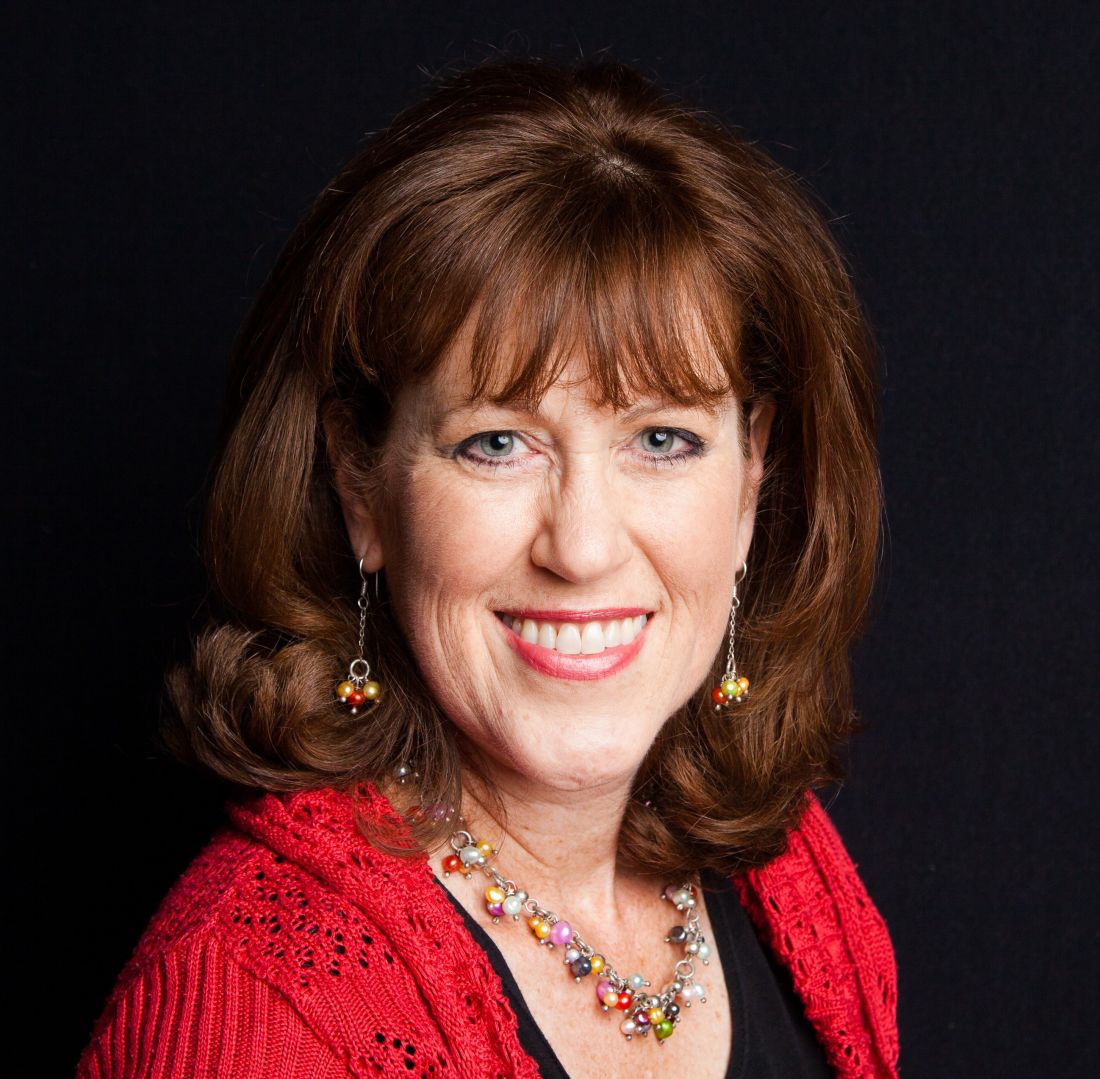
Jenny Ahlstrom
In late 2018, Myeloma Crowd launched a new website, HealthTree, that combines at one site disease information, trial matching (still using SparkCures), and several platforms for patient interaction. Myeloma Crowd also seeks HealthTree to be a vehicle for patient-data collection, such as a recent survey on vaccination experiences following myeloma treatment, said Jenny Ahlstrom, a myeloma patient and founder of Myeloma Crowd. “We use tech to build a patient constituency, and now we’re using it to collect data and do research,” she said in an interview. Patients “invite each other to contribute data,” an approach that makes Myeloma Crowd unique, she maintained. One goal is to “speed up the clinical trial process,” as well as link patients with the more conventional trials they qualify for, Ms. Ahlstrom said.
Any effective effort to link patients with appropriate trials is a big plus, commented Dr. Gallahan. It both “empowers patients,” while also offering a novel path for informing patients about trials. “Any time you can get more patients into trials, it’s a success,” although of course patients must still meet enrollment criteria for a trial, he said. Privacy-protected online patient networks also provide an easier way for patients to submit their data into a trial.
But often, these issues aren’t so easily resolved. “It’s difficult to guarantee whether participants meet eligibility criteria” when they enter through a crowdsourced portal because “there is no way to validate,” said Young Ji Lee, PhD, a biomedical informatics researcher at the University of Pittsburgh. An analysis based on patient data collected by crowdsourcing is also subject to a selection bias, and confidentiality is not easily ensured. A crowdsourced study still needs institutional review board oversight, she said in an interview,

Dr. Young Ji Lee
Dr. Lee cited a 2018 review that identified 202 studies published through March 2016 that involved health-related crowdsourcing, with 36% involving research. Oncology-related studies made up 7% of the total, fourth highest after public health, psychiatry, and surgery (J Med Internet Res. 2018 May;20[5]:e187). Dr. Lee ran her own study of published reports of crowdsourcing research in cancer through June 2016 and identified 12 studies (Cancer Med. 2017 Nov;6[11]:2595-605). “Crowdsourcing will continue to expand in biomedical research, including oncology, with the growing trends of patient-centered, participatory medicine,” she concluded.
Dr. Gallahan, Dr. Costello, and Dr. Lee had no disclosures. Dr. van Allen has been a consultant or advisor to Dynamo, Foresite Capital, Genome Medical, Illumina, Invitae, and Tango Therapeutics, he has received research funding from Bristol-Myers Squibb and Novartis, and he has an equity interest in Genome Medical, Microsoft, Synapse, and Tango Therapeutics. Ms. Ahlstrom said that Myeloma Crowd has received funding from Bristol-Myers Squibb, Celgene, Janssen, Sanofi, and Takeda.
Updated January 16, 2019.