


TABLE
Continuous glucose monitoring systems: The options
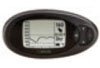 | 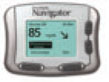 | 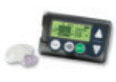 | 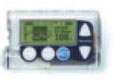 | ||
|---|---|---|---|---|---|
| SEVEN PLUS | FreeStyle Navigator | Guardian Real-Time System | MiniMed Paradigm Real-Time System | iPro Continuous Glucose Monitor* | |
| Manufacturer | DexCom | Abbott | Medtronic, Inc. | Medtronic, Inc. | Medtronic, Inc. |
| URL | www.dexcom.com | www.freestylenavigator.com | www.minimed.com | www.minimed.com | www.minimed.com |
| Price | $799 for system; $399 for 4 sensors; $79 for software | $1250 for system; $450 for 6 sensors | $1350 for system, including 4 sensors; $350 for 10 sensors | $999, plus cost of insulin pump; $35 per sensor | $1090 for start-up; $350 for 10 sensors |
| Receiver range | 5 feet | 10 feet | 6 feet | 6 feet | |
| Sensor life | Up to 7 days | Up to 5 days | Up to 3 days | Up to 3 days | Up to 3 days |
| Calibration | 2 hours after insertion, then every 12 hours | At least 4 times over a 5-day period at 10, 12, 24, and 72 hours after insertion | 2 hours after insertion, again within 6 hours, then every 12 hours | 2 hours after insertion, then within next 6 hours, then every 12 hours | |
| User-set alarm for highs/lows | Yes, plus factory alarm at 55 mg/dL that can’t be disabled | Yes | Yes | Yes | |
| Glucose reading display frequency | Every 5 minutes | Once every minute | Measures every minute, displays an average of every 5 minutes | Measures every minute, displays an average of every 5 minutes | |
| Displays directional trends | Yes | Yes | Yes | Yes | |
| Sources: Diabetes Network. Diabetes technology. Available at: www.diabetesnet.com/diabetes_technology/continuous_monitoring.php. Accessed January 6, 2010. | |||||
| DexCom. Available at: www.dexcom.com. Accessed January 6, 2010. | |||||
| FreeStyle Navigator. Available at: www.freestylenavigator.com. Accessed January 6, 2010. | |||||
| Medtronic. Available at: www.minimed.com. Accessed January 6, 2010. | |||||
| Conversations with Robert Sala, sales representative, DexCom, on May 1 and May 8, 2009. | |||||
| * iPro consists of sensor and transmitter only; no receiver. Sensor is inserted by provider; data are uploaded in provider’s office to help guide therapeutic decision-making. | |||||
Patients with severe diabetes benefit most
Patients with type 1 diabetes who use an insulin pump or are being switched from multiple injections to pumps, and patients who have problems with hypoglycemia are good candidates for CGMS. The latter group includes those who are not aware of their hypoglycemic state, those who have nighttime hypoglycemia, and those who experience severe episodes of hypoglycemia. The category also includes patients who keep their blood glucose levels higher than appropriate goals would indicate, because of their fear of hypoglycemia.
An additional group of patients who might benefit, although they do not fit currently approved indications for these devices, are pregnant women who should maintain tight glucose control. Other patients who might find CGMS useful are those with glycemic variability or those who have not achieved their A1C goal and want to be proactive.
Your letter of medical necessity can qualify patients like these for Medicare or private insurance reimbursement for the CGMS and for ongoing sensor supplies. You may also choose to purchase a system yourself for patients to use, and bill the patient’s insurance company for the service.
Accuracy continues to be a concern
Currently available systems are more accurate than the first generation of these devices. When glucose is rapidly changing, users need to be aware that there may be a time lag before the interstitial glucose reaches the same level as the blood glucose. So, while medication changes can be made based on CGMS, values should be confirmed with a fingerstick.
SEVEN and Navigator are comparable
A number of studies have confirmed the accuracy of CGMS.4-7 A study by Garg and colleagues compared the accuracy of the DexCom SEVEN and the FreeStyle Navigator.6 Fourteen patients wore sensors from both systems for 3 consecutive, 5-day periods. Laboratory reference measurements of venous blood glucose were taken every 15 minutes through an 8-hour period on days 5, 10, and 15 in clinic using the YSI STAT Plus Glucose Analyzer. Sensors were replaced at the end of the clinic day on days 5 and 10, and the sensors were removed at the end of day 15. The mean absolute relative difference for CGM compared with laboratory glucose measures was 16.8% for the SEVEN and 16.1% for the Navigator (P=.38), an insignificant difference between the 2 systems.
The 2 systems were also compared using continuous glucose error grid analysis, which evaluates how accurately CGM data lead to an appropriate clinical response by the patient. The error grid is divided into 5 zones and superimposed on the correlation plot. Plots in Zone A are a perfect fit and plots in Zone B are “benign error” that does not result in an inaccurate clinical response. The percentage of data points in Zones A or B was 94.8% for the SEVEN and 93.2% for the Navigator. The SEVEN provided better agreement with laboratory glucose measures for the range 40 to 80 mg/dL (P<.001).
Guardian evaluation has similar results
A similar study done by Medtronic in 2004 evaluated the Guardian RT, an earlier version of the Guardian, in 16 patients.7 Values from the Guardian RT were compared with reference YSI STAT Plus glucose analyzer glucose values taken every 30 minutes in clinic. The mean absolute percent difference was 19.7%±18.4%. Of the 3941 total paired glucose measurements, 96% fell in the clinically acceptable error grid Zones A or B. For low glucose values between 40 and 80 mg/dL, 76.1% of readings fell in Zones A or B; for high values, over 240 mg/dL, 86.8% of readings fell in Zones A or B. Accuracy in the hypoglycemic ranges declined as the time increased from insertion of the sensor.