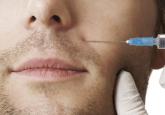
The US Food and Drug Administration recently approved a new use for Botox Cosmetic (onabotulinumtoxinA)(Allergan, Inc): temporary improvement in the appearance of moderate to severe crow’s-feet (lateral canthal lines). As reported in the prescribing information, 2 placebo-controlled clinical studies evaluated 833 adult participants with moderate to severe lateral canthal lines. Each participant received 4 U of onabotulinumtoxinA or placebo into 3 sites per side for a total of 24 U in the lateral orbicularis oculi muscle. The first injection was placed approximately 1.5 to 2.0 cm temporal to the lateral canthus and just temporal to the orbital rim. The second and third injection was either above and below, respectively, the first injection or both below the first injection depending on the appearance of wrinkles. Results showed that participants treated with onabotulinumtoxinA had greater improvement compared to placebo in the appearance of crow’s-feet. The most common side effect was lid edema, which occurred in 1% of participants.
What’s the issue?
Although dermatologists and cosmetic surgeons have been using onabotulinumtoxinA and other neurotoxins for treatment of crow’s-feet for a long time (off label), it is now approved for this indication. The volume used on label also is important because it gives guidance as to how much product can be used. Of course each patient is different and many clinicians may decide to use more or less product to achieve a desired correction. The fact that onabotulinumtoxinA is now deemed safe to be used in the crow’s-feet area also is important because it gives the physician some medical/legal protection. Will this approval really change anything that you currently do or don’t do?
We want to know your views! Tell us what you think.